
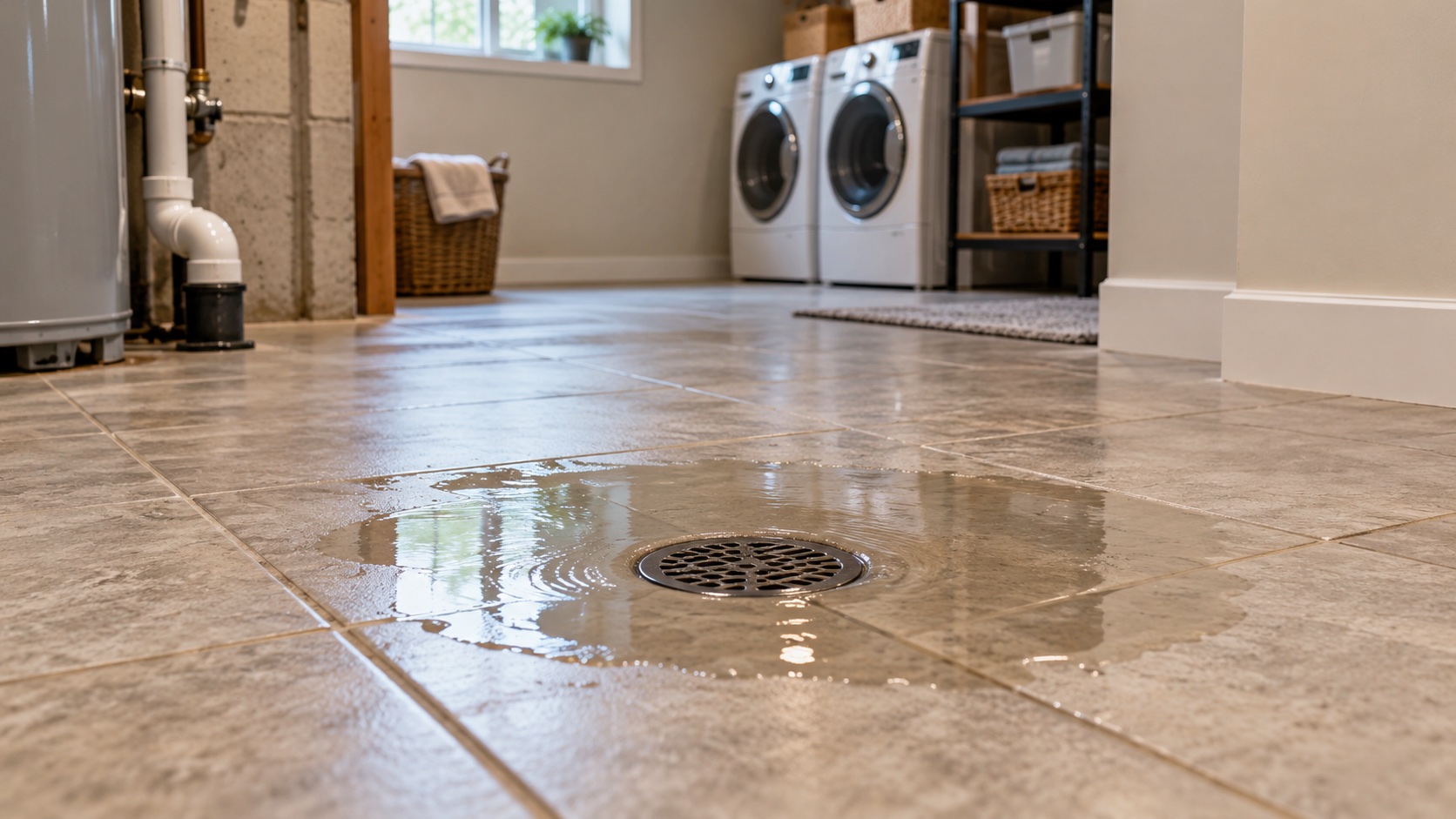
When water goes the wrong way
A basement floor drain is supposed to carry water away. When water comes back through it, the cleanup can involve much more than a mop. Flooring, wall finishes, furniture, and stored belongings may all be affected.
Before an incident happens, check how your homeowners policy treats water that backs up through a sewer or drain. A large dwelling limit does not tell you whether this particular cause of damage is covered. The endorsement, its limit, and its exclusions matter.
What is sewer and drain backup coverage?
Often called water-backup coverage, it is typically an optional homeowners endorsement addressing specified damage when water or sewage backs up through a sewer or drain. Some forms also address water overflowing from a sump, sump pump, or related equipment. Do not assume those benefits are identical across policies.
For a qualifying loss, coverage may help pay for cleanup and damage to insured parts of the home or belongings. The covered cause, property, limit, deductible, and other conditions come from the actual policy. Ask whether any additional living expenses or mold-related costs are included and whether separate restrictions apply.
Backup coverage, flood insurance, and service-line coverage do different jobs
Water damage needs to be evaluated by its source and the policy wording. Water backing up through an interior drain, surface water entering from outside, and a sudden pipe leak can involve different provisions. A backup endorsement does not automatically cover flood, groundwater seepage, or every plumbing problem.
Flood insurance is a separate coverage review. If flooding contributes to a backup, ask how the applicable exclusions and causation language affect the claim; the path the water takes into the house does not by itself establish coverage.
Repairing the sewer line is a separate question
Paying for damage inside the house does not automatically mean paying to fix the pipe that caused it. The Maryland Insurance Administration notes that most policies with backup coverage pay for resulting damage but do not cover repairing or replacing the pipe itself.
An underground service-line endorsement may address an eligible buried connection under its own terms. It has separate definitions, covered causes, limits, and deductibles. Neither endorsement automatically replaces the other, and preventive maintenance or replacement of a functioning line is not automatically insured.
Choose a limit around what is actually downstairs
Think through the space that could be damaged: an unfinished storage area, a laundry room, or a finished basement with a bathroom and home office. List the finishes, furniture, electronics, and belongings you would need to repair or replace. Then discuss available limits with your agent.
Ask whether cleanup, building repairs, and belongings share one total backup limit. Confirm how the deductible works and whether the endorsement changes settlement terms. A coverage limit is a ceiling subject to the policy, not a promise that every expense will be paid.
If you have recently finished a basement or added expensive equipment, bring that information to your review. Keep a current home inventory and photos so the discussion reflects what you own.
Ask specifically about your sump pump
If your home relies on a sump pump, ask whether the proposed endorsement includes sump overflow and which situations qualify. Discuss mechanical failure, power interruption, and any maintenance conditions or exclusions. An endorsement name alone is not enough to answer those questions.
Damage caused by an overflow and the cost of replacing a failed pump can be treated differently. Ask your agent to walk through both. A battery backup or alarm can help with prevention, but neither equipment nor an insurance endorsement guarantees that a basement will stay dry.
Reduce the risk and prepare for a claim
Have a qualified professional inspect drainage and sump equipment as appropriate for your home. Ask a plumber whether a backwater valve is suitable and permitted locally. Keep valuable items above basement floor level, maintain drainage, and follow equipment maintenance instructions.
If a backup occurs, keep people and pets away from potentially contaminated water and electrical hazards. Contact your insurer promptly, document the damage from a safe location, and ask about emergency mitigation and claim requirements. Use qualified professionals when cleanup or electrical safety requires it. Keep photos, receipts, and a record of the work. Coverage decisions still depend on the policy and the facts of the loss.
Put the endorsement into your next coverage review
Bring your declarations page and endorsement forms, describe your basement and sump setup, and ask: Is sewer and drain backup included? Is sump overflow included? What limit applies? What is the deductible? What exclusions should I understand? Does the policy address pipe repair separately?
Sonon Insurance can help you review available options and understand how backup coverage fits with the rest of your homeowners protection. Comparing those details now makes the coverage decision more useful than discovering a gap during cleanup.
Frequently asked questions
Is sewer and drain backup automatically covered by homeowners insurance?
Do not assume it is. It often requires an optional endorsement. Check your declarations page and read the applicable form for covered causes, limits, deductibles, and exclusions.
Does sewer backup coverage include sump pump overflow?
Some endorsements include it, but the trigger and conditions vary. Ask specifically about overflow, pump failure, and power interruption. Coverage for resulting damage does not automatically include replacing the pump.
Will backup coverage pay to replace a damaged sewer pipe?
Not automatically. Resulting damage inside the home and repair of the pipe are separate questions. Review the homeowners policy and any service-line endorsement for the actual benefits and requirements.
Is water-backup coverage the same as flood insurance?
No. A backup endorsement and flood insurance address different risks. If flood or surface water contributes to a loss, the applicable exclusions and causation provisions must be reviewed.
How much sewer and drain backup coverage should I carry?
Review the space and belongings at risk, available limits, cleanup and repair costs, and what you could pay yourself. Ask whether building damage and personal property share a limit. There is no one amount that suits every home.
Helpful resources
Coverage, eligibility, and plan terms vary by carrier and state. This article is general information, not a promise of coverage or individualized financial advice.