
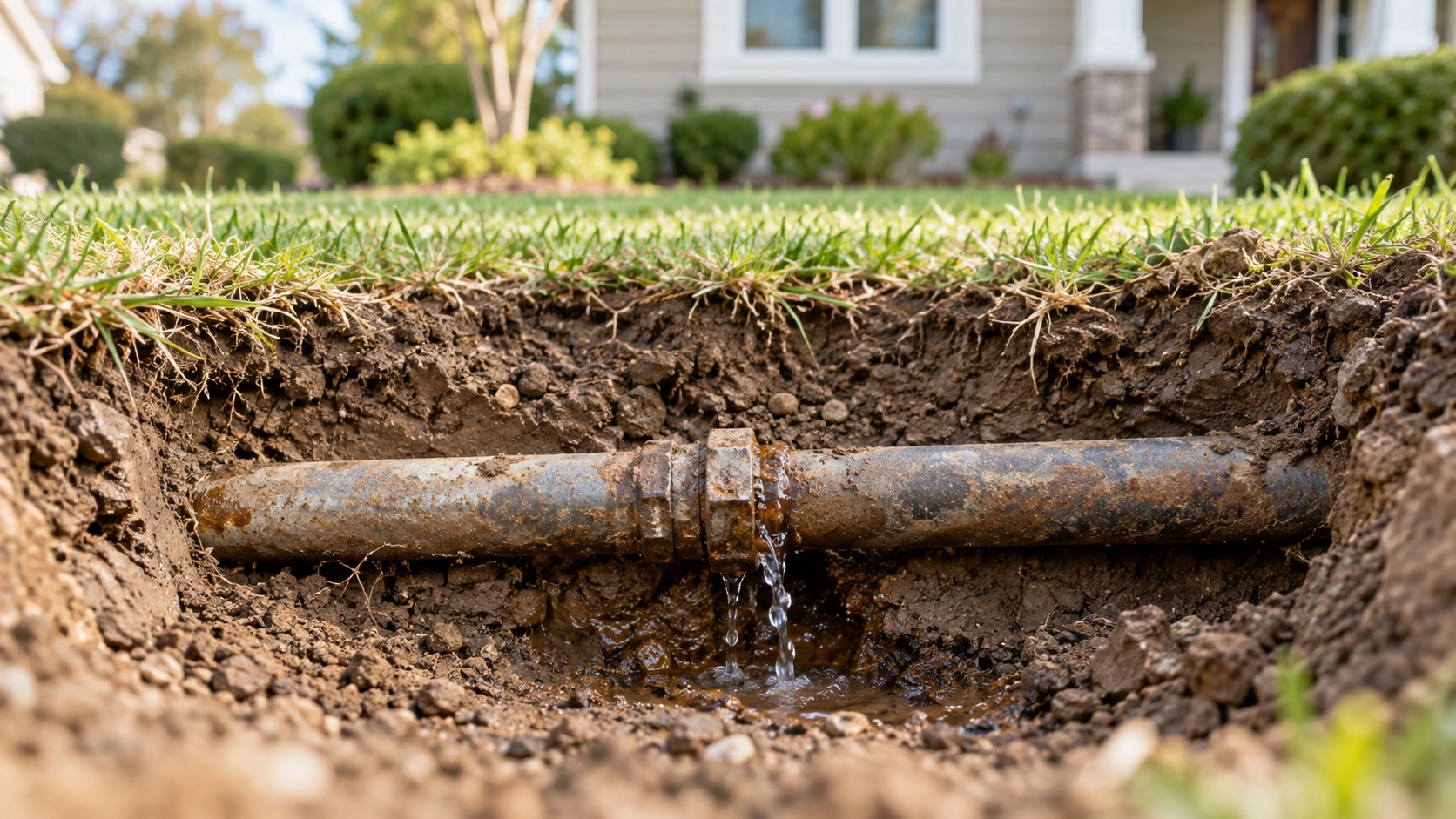
An overlooked connection to your home
You probably know the age of your roof. You may know when your water heater was replaced. But how much do you know about the lines connecting your home to utility services? They can stay out of sight for years until a problem interrupts water, sewer, or another essential connection.
Underground service line coverage is worth discussing during a homeowners insurance review. The important question is how the specific endorsement responds to a failure—not simply whether a quote lists “service line” as a benefit.
What is underground service line coverage?
It is typically optional insurance for a qualifying failure of certain buried utility lines serving the insured home. Depending on the endorsement, eligible lines may include water, sewer, electrical, gas, or communications connections that you own or are legally responsible to repair.
The form determines where a covered line begins and ends, which services qualify, and what counts as a failure. Do not assume every pipe, wire, or underground system on the property is included. Ask your agent to identify the covered connections using your home’s actual layout.
Who is responsible for the lines?
A utility may maintain its main network while the homeowner is responsible for part of the connection to the house. The boundary can vary by utility, municipality, and service agreement; the curb, meter, or property line is not a universal rule.
Check with each utility or local authority to confirm ownership and repair responsibility. If you have a shared line, an easement, or an unusual connection, bring those details to your insurance review. Keep any available records showing the line’s route, material, and past repairs. Coverage should be evaluated against your actual responsibility, not an assumption about where the public system ends.
Does service line coverage include wear and tear?
It can, but coverage varies by endorsement. Some forms expressly include a qualifying failure caused by wear and tear, corrosion, deterioration, or root intrusion. Others exclude or restrict those causes. A broad statement that homeowners insurance excludes wear and tear does not tell you what a separate service-line endorsement provides.
Review both the covered-causes language and the definition of service-line failure. A covered cause alone does not guarantee payment. The line must meet the eligibility rules, the loss must satisfy the endorsement’s trigger, and the other conditions and exclusions still apply. Ask your agent to point to the wording in the proposed form.
A helpful question is: “If an eligible pipe develops a leak because it has corroded, how would this endorsement respond?” Ask the same question about tree roots or freezing if those risks are relevant. Request a written explanation rather than relying only on a coverage label.
Preventive replacement is not automatically covered
Coverage for a failure caused by aging is different from paying to replace a functioning line because it is old. An endorsement may require a leak, break, collapse, or another defined physical failure that makes repair or replacement necessary. Age by itself may not satisfy that requirement.
For example, a plumber may recommend replacing an older line before it develops a problem. That can be sensible maintenance, but the recommendation does not automatically create an insured loss. Likewise, buying coverage after a known problem is discovered does not make that earlier damage newly covered.
If an inspection identifies a defect, ask the insurer how the policy applies before assuming the work is reimbursable. Obtain a diagnosis and preserve documentation. Do not postpone urgent safety measures while waiting for a coverage decision; ask what documentation and approvals are needed for repairs.
Look beyond the pipe itself
A repair estimate can involve more than a replacement section of pipe. Excavation, access work, backfilling, and restoration of disturbed property can affect the total bill. Some endorsements help with certain related expenses after a covered failure, but each category may have limits or conditions.
Ask what the overall service-line limit includes, whether there are sublimits or age-based restrictions, and which deductible applies. Confirm how lawns, sidewalks, or driveways are handled and whether any additional expense benefits are offered. Avoid treating the advertised limit as an unconditional payment for the entire project.
Service-line protection and water-backup coverage do different jobs
A damaged sewer connection and sewage backing up inside a home can happen during the same event, but they raise different coverage questions. Service-line coverage concerns the eligible buried connection and covered related work. Water-backup coverage addresses specified backup damage under its own terms. One does not automatically replace the other.
Also check exclusions for piping beneath the house, septic systems, wells, irrigation, pool equipment, and unconnected lines. These are questions to ask, not a universal exclusion list; the definition and exclusions in your endorsement control.
Is underground service line coverage worth considering?
Consider what you know about the lines, which repairs would be your responsibility, and how comfortably you could handle a bill that includes digging and restoration. Obtain local repair estimates when useful, then compare the available premium, deductible, limit, and coverage terms. An older home can make this conversation especially relevant, but age alone does not decide whether a policy is a good fit.
Sonon Insurance can help you review available service-line endorsements alongside your homeowners coverage. Bring your current policy and any utility or inspection records. We can help you understand the questions to resolve before a buried connection becomes a visible problem.
Frequently asked questions
Does standard homeowners insurance cover underground service lines?
Do not assume the base policy covers a buried line failure. An optional service-line endorsement may address certain losses. Confirm the actual policy and endorsement terms.
Can wear and tear be covered by a service-line endorsement?
Yes, some endorsements include qualifying failures caused by wear and tear, corrosion, or deterioration. Other forms restrict or exclude those causes. Eligibility, the definition of failure, and all other policy conditions still apply.
Will insurance replace an old line before it fails?
Preventive replacement is not automatically covered. A functioning line’s age or a recommendation to upgrade it may not meet the endorsement’s covered-loss requirements. Ask the insurer to evaluate the actual condition and wording.
Does water-backup coverage also pay to repair the sewer line?
Not automatically. Backup damage inside the home and repair of an eligible underground connection involve different provisions. Review both coverages and their separate limits and deductibles.
Coverage, eligibility, and plan terms vary by carrier and state. This article is general information, not a promise of coverage or individualized financial advice.